June 21, 2026 · 6 min read
How To Photograph Your Hair To Track Progress Over Time
Learn how to track hair growth photos with consistent lighting, angles, distance, and timing. Better photos make progress easier to see and bad hair days easier to ignore.
The short version
- The best hair progress photos are consistent, not flattering.
- Use the same four angles every time: front, crown, left side, and right side.
- Keep lighting, distance, camera height, and hair state the same.
- Do not compare wet hair to dry hair or harsh flash to soft daylight.
- Review photos monthly so you can see trends instead of daily noise.
Bad hair photos are loud. One harsh bathroom shot can make your crown look worse than it is. One old selfie can make you think your hairline changed overnight. One wet-hair photo can send you into a spiral.
The problem is not always your hair. Sometimes the problem is the photo.
If you want to know how to track hair growth photos properly, the answer is consistency. Same angles. Same light. Same distance. Same hair state. You are not taking a selfie. You are creating evidence you can compare later.
Here is the setup that works.
Use the same four angles every time.
A complete photo set should show the areas most likely to change:
- Front hairline
- Crown
- Left side
- Right side
The front shows shape and density along the hairline. The crown shows scalp visibility and coverage. The side angles show temples, part behavior, and how the hair sits around the face.
Do not add ten random angles unless you need them. More photos can make comparison harder if the setup changes every time.
Choose your four angles, then repeat them weekly.
track hair loss progressLock the light before judging the hair.
Lighting can lie.
Overhead light makes the scalp brighter. Flash cuts through hair separation and exaggerates contrast. Soft window light can make the same area look calmer. Bathroom lights can be brutal if they sit directly above the crown.
Pick one lighting setup and stay with it.
Good options:
- Same bathroom light every time
- Same window light at the same time of day
- Same mirror spot with no flash
- Same phone exposure if possible
Avoid mixing flash photos, car mirror photos, gym bathroom photos, and bedroom selfies. Those photos may show your hair, but they do not compare cleanly.
Keep hair state boring.
Your hair should be clean, dry, and sitting naturally. That is the easiest baseline to repeat.
Do not take progress photos right after a shower. Wet hair shows more scalp. Do not take them right after wearing a hat. Compression changes root direction. Do not take them after loading on product. Product can clump strands and make the part look wider.
If you style your hair the same way every day, you can take styled photos too, but keep the style consistent. Do not compare a slicked-back photo to a loose fringe photo and call it progress.
The boring version is the best version for tracking.
Use distance markers.
Distance changes everything.
A close photo can exaggerate the hairline. A far photo can hide detail. A crown photo from one foot away will not compare cleanly to a crown photo from three feet away.
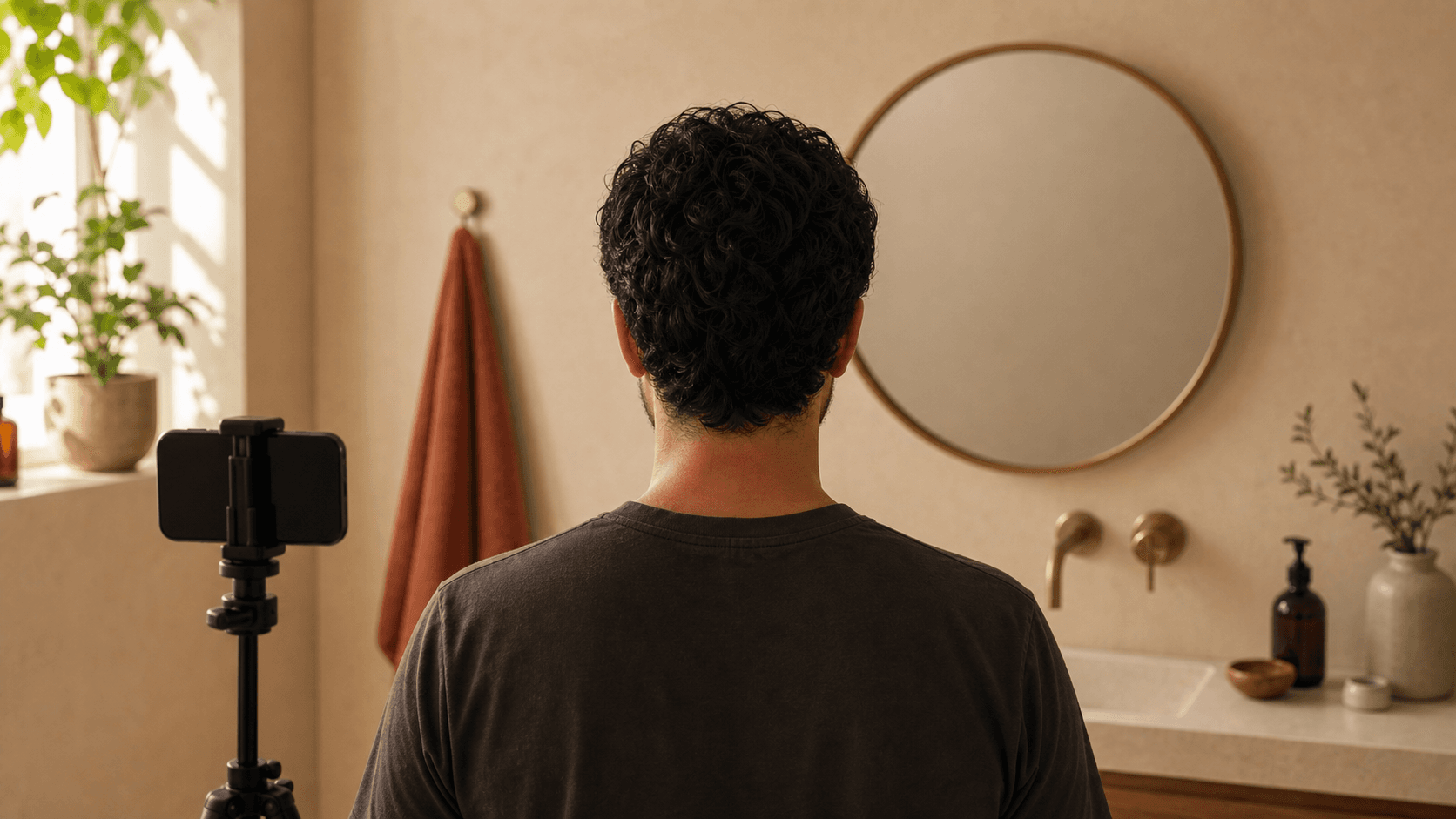
Make distance easy to repeat. Stand in the same place. Put tape on the floor if needed. Use a phone stand or the same mirror position. For crown photos, use the same arm angle or ask the same person to take the photo from the same spot.
If you are using a phone stand, keep the height consistent too. A lower angle can make the forehead look bigger. A higher angle can make the crown look more exposed.
This is the part most people skip, and it is why their photo comparisons feel confusing.
hairline shapeLabel photos so you can compare later.
Your camera roll will betray you if you leave everything unlabeled.
Create a folder for hair photos. Name or group photos by date. Add one short note each week:
- Wash day
- Product used
- Haircut date
- Stress or sleep change
- Lighting issue
- Anything unusual
The notes do not need to be deep. They just need to explain the photo.
If week two looks worse but you had wet roots, that matters. If week four looks better but you changed lighting, that matters too.
Good tracking is not just photos. It is photos plus context.
Review monthly, not every night.
Weekly photos are for collecting evidence. Monthly review is for making sense of it.
Put week one beside week four. Compare the same angle. Look for zone-level changes: hairline shape, crown visibility, part width, side density, and overall volume.
Do not zoom into every strand. Do not decide based on one photo. Do not compare your best old picture to your worst new picture.
This is where Morph can make the process easier. Guided scans standardize the photo angles and turn repeatable images into a Hair Health Score, so you can track visible change without rebuilding the system yourself. hair health score
Frequently asked questions
How often should I take hair progress photos?
Once a week is enough. Review them monthly so you can see trends instead of reacting to daily variation.
Should I use flash for hair photos?
No, not unless you use it every single time. Flash can exaggerate scalp visibility and make comparisons harsher.
Should my hair be wet or dry?
Use clean, dry hair. Wet hair clumps and exposes more scalp, which makes progress harder to judge fairly.
What angles should I photograph?
Use front, crown, left side, and right side. Those four angles cover the main zones people want to compare.
How do I make crown photos consistent?
Use a phone stand, mirror setup, or the same helper standing in the same place. Keep camera height and distance consistent.
What is the biggest mistake with hair progress photos?
Comparing photos taken under different conditions. Light, angle, distance, wetness, and styling can all change the result.
Early access
Know exactly what's wrong with your hair
Morph scans your scalp with AI, gives you a Hair Health Score across 4 dimensions, and builds your personalised 12-week plan based on your actual results, not generic advice.
Join the waitlist →More from Morph
All articles6 min read
Best Apps To Track Hair Growth And Loss In 2026
The best hair growth tracker app is the one that helps you take consistent photos, compare the same zones, and understand whether your routine is actually changing anything. In 2026, tracking matters more than another folder of random camera roll photos.
6 min read
What Is A Hair Health Score And How Is It Calculated
A hair health score turns your hairline, density, thickness, and scalp condition into one trackable number. The useful part is not the score by itself, but how it changes over time.