June 22, 2026 · 6 min read
How To Measure Hair Density At Home
Measure hair density at home by comparing the same scalp zones, part width, crown visibility, and photo angles over time. The goal is repeatable comparison, not a perfect count.
The short version
- You cannot truly count every hair at home, but you can measure hair density through repeatable visual comparisons.
- Focus on part width, crown visibility, hairline coverage, and how much scalp shows under the same light.
- Use clean, dry hair and the same camera setup every time.
- Avoid judging density when hair is wet, oily, freshly cut, or product-heavy.
- Monthly comparisons are more useful than daily checks.
Hair density is the thing people mean when they say, “my hair just does not look as full anymore.” It is not always about clumps in the shower. It is about coverage.
You can measure hair density at home, but not by counting every strand. That would be impossible and miserable. What you can measure is whether the same zones create the same coverage over time.
Part width. Crown brightness. Hairline density. Scalp visibility. Styling volume.
Those are the clues that actually show up in real life.
Use zones instead of a full-head guess.
Do not try to judge your entire head at once. Break it into zones.
Start with four:
- Front hairline
- Part line
- Crown
- Left and right temples
Each zone tells you something different. The hairline shows shape and edge density. The part line shows how much scalp is visible through separated hair. The crown shows coverage in a hard-to-see area. The temples show whether one side is changing differently from the other.
Take photos of each zone in the same setup. Same light, same distance, same hair state, same angle.
This is the simplest way to measure hair density at home without pretending you have lab tools in your bathroom.
hairline shapeTrack part width carefully.
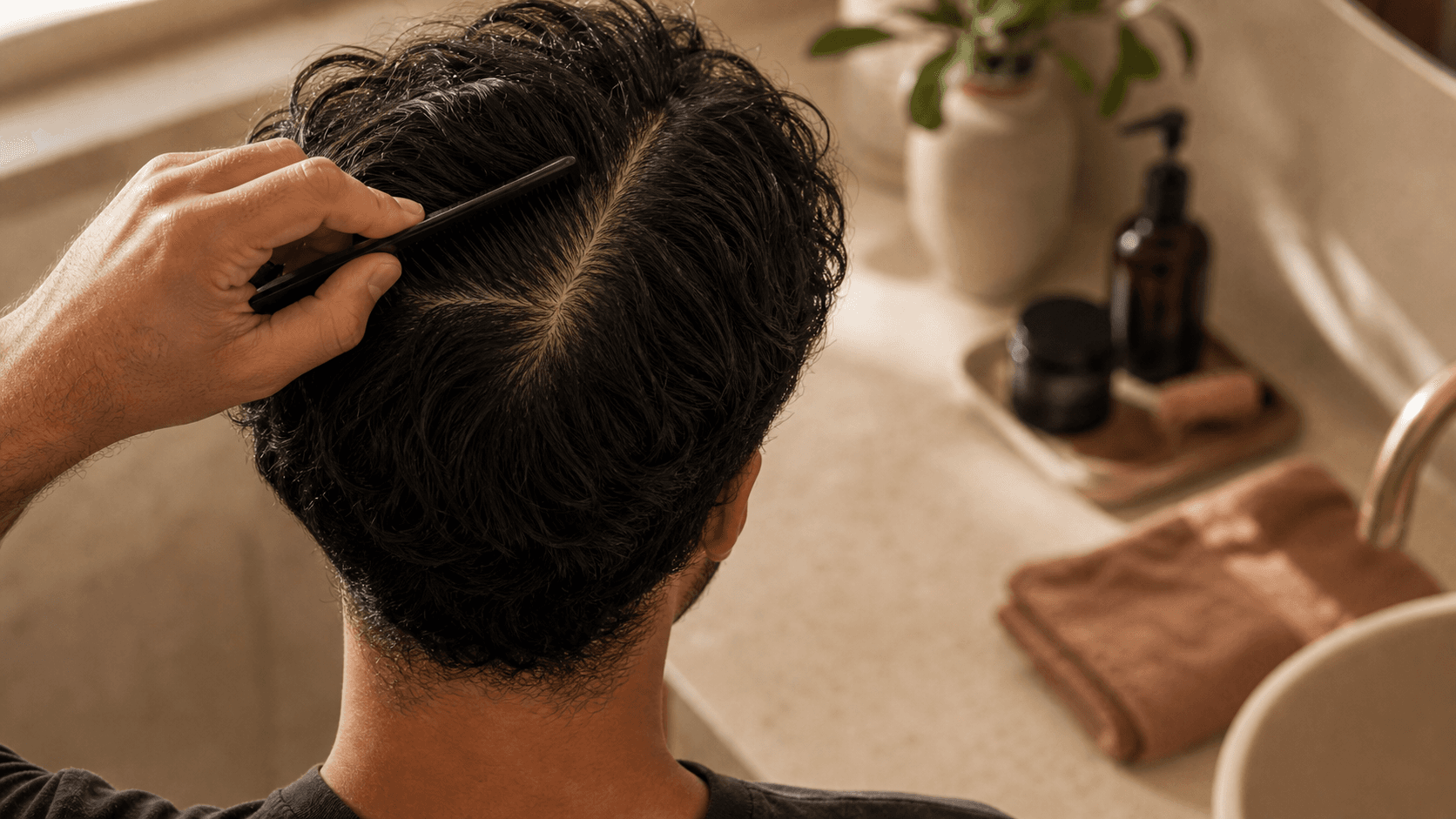
The part line is one of the easiest density clues because it gives you a visible line to compare.
Create the same part each time. Do not press hard or create an unnaturally sharp line. Let the hair separate naturally, then take a photo from above or slightly behind.
Look for width, not brightness. Brightness can change with lighting. Width is more useful. Does the visible scalp line look wider near the front? Does it extend farther back than before? Are there more gaps along the same part?
Do not judge wet hair. Wet strands clump together and make the part look wider. Oily hair can do the same thing.
scalp showing through hairCompare crown visibility under the same light.
The crown is tricky because of the natural swirl. Many people see scalp at the crown even with normal density.
That is why the comparison has to be fair.
Use the same light and angle every time. If possible, use a phone stand or mirror setup so the camera looks at the crown from the same position. Keep hair dry and styled normally. Do not compare a post-shower crown to a dry crown photo from last month.
Look for repeatable change:
- Is the visible area wider?
- Is the crown harder to cover?
- Does the same spot look brighter in every photo?
- Does hair separate faster there during the day?
The crown can look scary in one harsh photo. It becomes meaningful when it changes across matching photos.
Use styling behavior as supporting evidence.
Photos are the main evidence, but styling behavior gives useful context.
If your hair density is changing, you may notice that the same haircut no longer sits the same way. The top collapses sooner. The part opens faster. The crown needs more attention. A product that used to add texture now makes everything look separated.
Those clues are not proof alone, but they matter when they line up with photos.
Write short notes with each weekly check:
- Haircut age
- Wash day
- Product used
- Wet or dry hair
- Lighting changes
- Any unusual styling issue
This stops you from treating every bad hair day like a density change.
What at-home density tracking cannot tell you
At-home tracking cannot give you a perfect strand count. It cannot tell you the exact number of follicles. It cannot explain every cause behind what you are seeing.
That is fine. You do not need perfect lab data to notice useful patterns.
You need consistency. If the same areas look stable over a month, that is useful. If the same zones look less covered across several matching photos, that is useful too.
Morph turns this idea into a guided scan: front, crown, left, and right photos, then a Hair Health Score across density, hairline, thickness, and scalp health. It gives you a more structured way to compare what your eyes are already trying to measure. hair health score
Frequently asked questions
Can I measure hair density at home accurately?
You can track visible density changes accurately if your photos are consistent. You cannot count every hair, but you can compare coverage in the same zones over time.
What is the easiest area to check?
The part line is usually easiest because the visible scalp line gives you something concrete to compare.
Should I measure hair density with wet hair?
No. Wet hair clumps together and exposes more scalp, which makes density look worse than it may be.
How often should I take density photos?
Once a week is enough. Compare monthly so you can see trends instead of reacting to daily variation.
What if my crown always shows scalp?
A natural crown swirl can show scalp even when density is normal. Compare the same crown angle over time to see whether the visible area is changing.
What should I write down with each photo?
Note wash timing, product, haircut date, lighting, and whether your hair was dry. Those details explain why one photo might look different.
Early access
Know exactly what's wrong with your hair
Morph scans your scalp with AI, gives you a Hair Health Score across 4 dimensions, and builds your personalised 12-week plan based on your actual results, not generic advice.
Join the waitlist →More from Morph
All articles6 min read
Best Apps To Track Hair Growth And Loss In 2026
The best hair growth tracker app is the one that helps you take consistent photos, compare the same zones, and understand whether your routine is actually changing anything. In 2026, tracking matters more than another folder of random camera roll photos.
6 min read
What Is A Hair Health Score And How Is It Calculated
A hair health score turns your hairline, density, thickness, and scalp condition into one trackable number. The useful part is not the score by itself, but how it changes over time.